
Finding McLean Residents
Search the McLean residents directory by matching the kind of fact you have to the office that keeps it. A street address is usually the strongest first fact because Fairfax County ties it to a parcel. A full name can lead to a property record, a court index, a voter-status route, or a dated directory entry. Older searches need more than one source because McLean sits in Fairfax County and has never had a separate city clerk keeping one all-purpose roll.
Official sources prove different things. A tax record identifies an owner of record and a parcel, not every person at the address. A deed gives parties and a legal description. A city-directory listing is a dated historical clue. Keep the source date, spelling, address form, and record number together. That makes it easier to separate two people with the same name and to see when a result is only a lead.
- Enter the street address in the county property search and save the parcel ID, situs address, and any different mailing address.
- Use the parcel ID and map to confirm the right lot before following an owner name into a deed or permit record.
- Search the Fairfax Circuit index by party name or case number when a court record is relevant, then request a file separately if the docket matters.
- For a past household, check the Virginia Room’s Fairfax directory years, newspapers, yearbooks, and historical maps.
- When an online result is missing, ask the actual custodian about the Research Room, archive, mail-copy, or VFOIA route instead of treating a web result as final.
McLean Resident Record Custodians
McLean resident records are held by Fairfax County and Virginia offices. The county’s Department of Tax Administration connects an address to a parcel. The Fairfax Circuit Court maintains land instruments and court files. The Office of Elections handles registration information and list requests. The Virginia Room is the local-history route when the question is about an earlier household rather than a current county record.
Fairfax Circuit Land Records
4110 Chain Bridge Road, Suite 317
Fairfax, VA 22030
703-246-4168
Fairfax DTA / iCare
12000 Government Center Parkway, Suite 357
Fairfax, VA 22035
703-222-8234
Fairfax County Elections
12000 Government Center Parkway, Suite 323
Fairfax, VA 22035
703-222-0776
McLean Is a Fairfax County CDP
McLean is an unincorporated census-designated place in Fairfax County, not an incorporated city. That changes the search path. A query for a “McLean city record” often belongs with the county assessor, the Circuit Court, Fairfax GIS, or the county election office. The Dranesville District and a McLean postal label can help describe the place, but neither replaces the county’s parcel, court, or voter systems.
Start with the record’s geography. A postal address can say McLean while a parcel, precinct, tax-map grid, and Census boundary describe it differently. The county’s GIS map resources make those layers visible. The distinction is especially useful near Tysons and the Potomac corridor, where postal and civic boundaries overlap without becoming the same boundary.
Note: A McLean label narrows the search area, but the parcel ID or legal description is the stronger key when county systems disagree about an address.
McLean Address Search in iCare
The county’s iCare portal is the best opening move for an address-led McLean residents directory search. It accepts address, tax-map, map, and owner routes. On the address form, a broad street search works by leaving the Number blank, entering the street, and leaving Suffix blank. The portal’s examples also support a leading asterisk for broader street matching. Save the result’s parcel identifier before moving to a map or deed index.
| iCare field | How it works | Useful McLean use |
|---|---|---|
| Number | Optional street number | Leave blank to browse one street |
| Unit# | Optional unit field | Separate a unit from the base address |
| Street | Optional text with wildcard support | Use a partial street form when exact formatting fails |
| Suffix | Optional dropdown | Omit it for broader results |
| Sort and results controls | Optional dropdowns | Organize a longer street result list |
See the county’s iCare address search before entering a street. The county says ownership and sales information is updated twice weekly, while assessment is as of January 1. A property’s situs address and tax mailing address may differ. That difference can point to a trustee, business, care-of recipient, or another address, and it should not be treated as proof that any named person occupies the property.
Fairfax County’s address-search form shows the Number, Unit#, Street, Suffix, sorting, and results controls used for a McLean residents directory search.
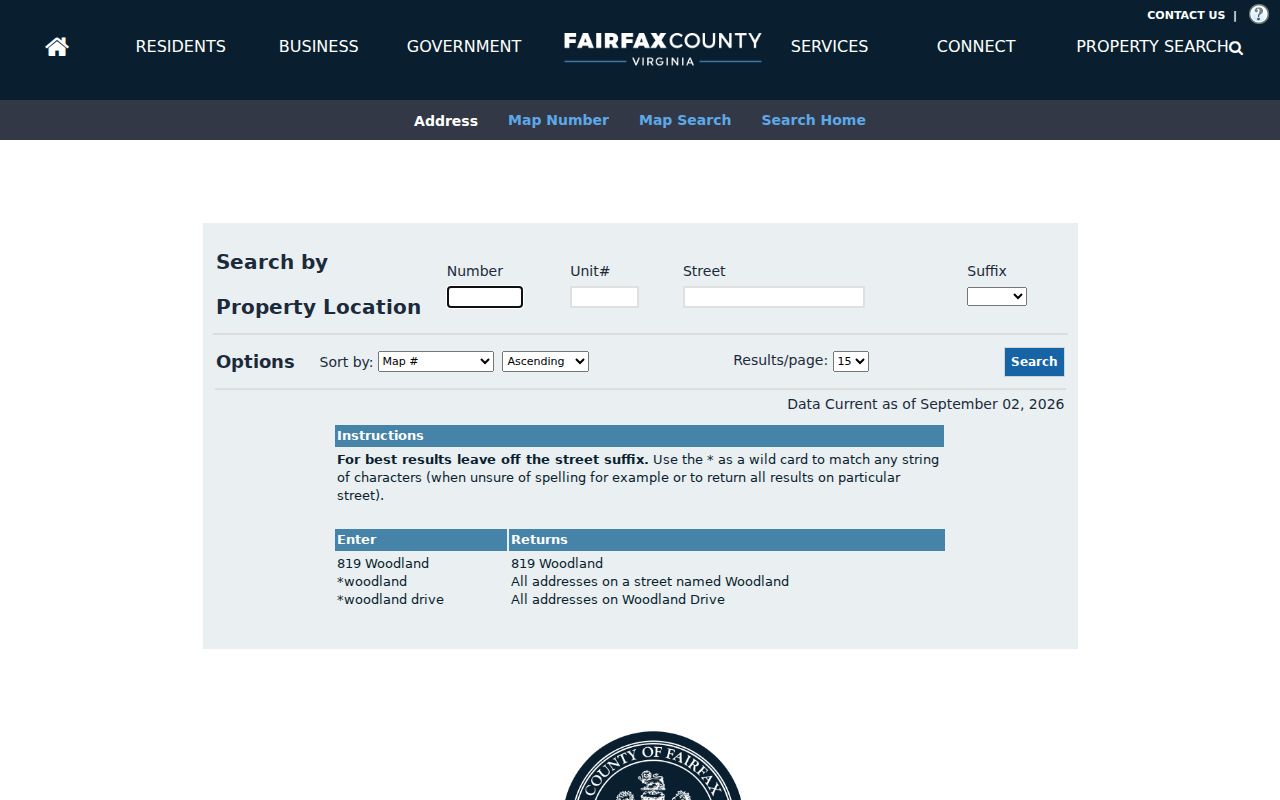
Those separate fields make it practical to widen a street query first, then narrow it with the returned parcel and exact address.
McLean Deeds and Parcel Trails
Once an address produces a parcel, the Fairfax Circuit Court land-record route connects names to recorded instruments. The county describes its land-record collection as reaching back to 1742. Its public Research Room is the free in-person path; CPAN is the subscriber layer for a fuller set of index and document modules; older deed books remain a Historic Records Center research task. A deed’s grantor is the transferor and its grantee is the recipient. Both names must be tested against the legal description, not just the street label.
The Land Records Research page explains that a copy request works best with an instrument number or exact book and page. If those are unknown, use CPAN or the Research Room index first. Certified copies cost $2 per document plus $0.50 per page. The county accepts mailed copy requests with the form, payment, and a self-addressed stamped envelope, while its Research Room is the fallback for direct index work.
Court Public Access Network information describes the subscriber agreement and record modules available through CPAN.
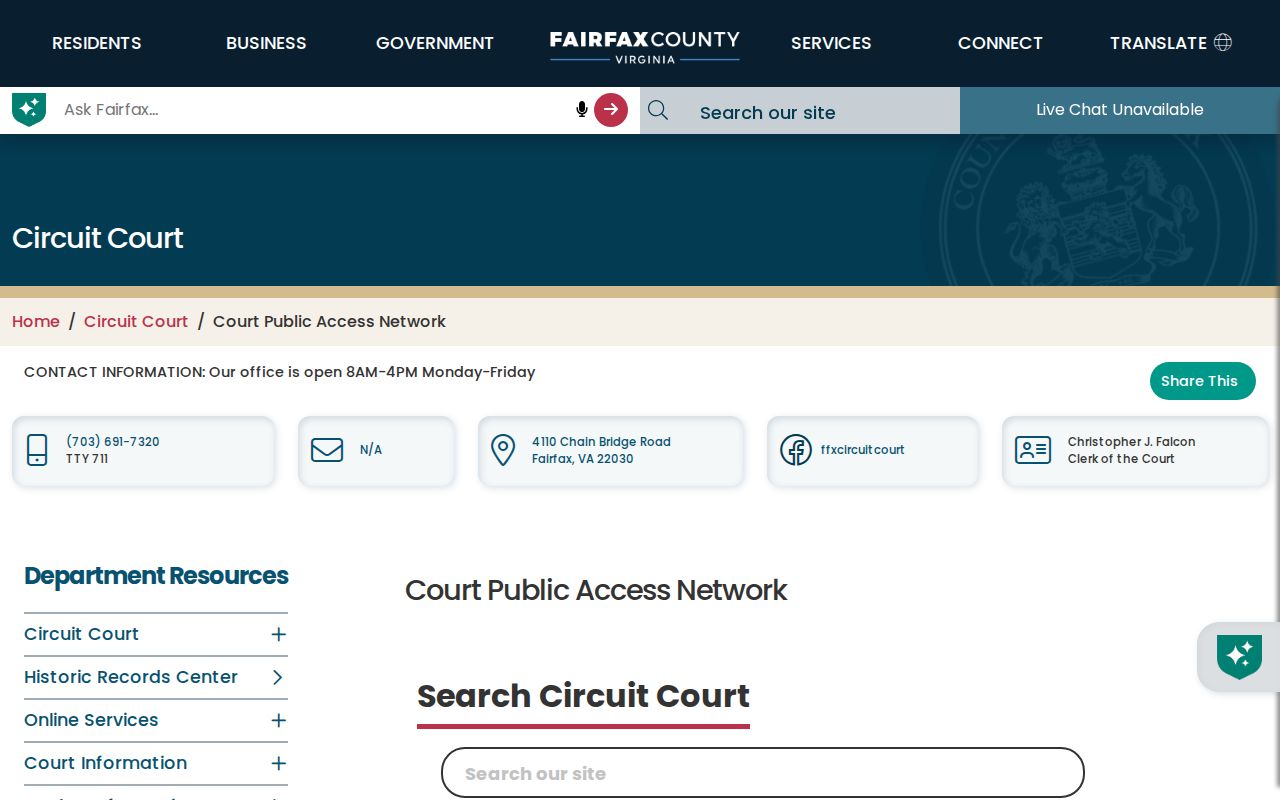
CPAN complements, rather than replaces, the Research Room and Historic Records Center when a McLean parcel trail reaches an older book or a record series outside the public web interface.
Current McLean Resident Sources
There is no complete, official list of every McLean household. The useful current sources each cover a defined relationship to a place or record. Read an owner of record, an indexed court party, a voter-status result, or a business filing for what it actually establishes. The table below keeps those limits visible while still giving a practical order for a McLean residents directory search.
| McLean source | What it can establish | Custodian | Access path |
|---|---|---|---|
| iCare tax parcel | Owner of record, situs and mailing address, assessment and sales context | Fairfax DTA | Free online, phone, or office |
| Land-record index | Grantors, grantees, instruments, plats, and legal descriptions | Fairfax Circuit Court | Research Room, CPAN, HRC |
| Voter record products | Statutorily available registration and district fields | Virginia Elections | Portal or certified list request |
| Circuit case index | Party appearance, case type, and docket orientation | Fairfax Circuit Court | Free eCaseSearch, then clerk or CPAN |
| Local history collections | Dated directory, newspaper, yearbook, and map clues | Virginia Room | Online resources, microform, staff assistance |
The source choice changes with the question. The McLean resident lookup route is for verifying one person across independent records. A name that appears in a parcel report should still be read as an ownership clue, not as a census of the address.
- Parcel
- A county-defined piece of land identified by a parcel or tax-map number.
- Index
- A finding tool that points to a record. It is not always the document image itself.
- Resident roll
- A record set that lists people for one defined purpose, such as registration or ownership.
- Criss-cross directory
- An address-first directory, when a repository has a volume for the relevant year.
McLean Voter Record Limits
Virginia’s Citizen Portal is built for a voter to check registration, polling place, absentee options, districts, and voting-history status. Its status route calls for name, date of birth, the last four digits of a Social Security number, Fairfax County locality selection, and a certification checkbox. It is not a public, free-form list of people on a street. Virginia law controls the distinct public-inspection and list-request products.
The public voter-list framework can include name, residence address, year of birth, gender, and election-district information, but it excludes Social Security numbers, full dates of birth, ballot choices, and protected-address information. A requester who needs a defined voter-list product must use the state form and its responsibility statement. For a McLean record problem, the local fallback is the Fairfax Office of Elections rather than an assumption that a failed portal match settles the question.
Virginia’s Citizen Portal presents the status, polling-place, absentee, and registration routes used in this part of a McLean residents directory search.
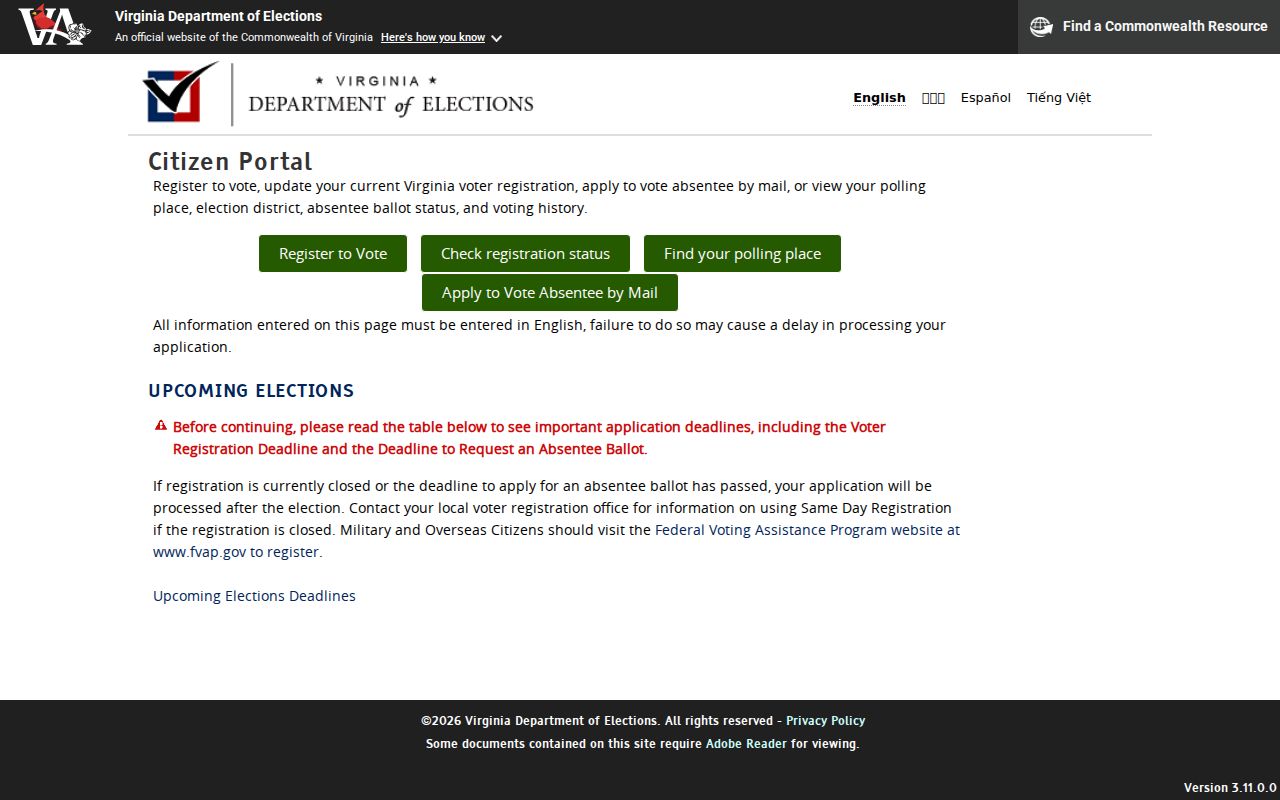
The portal is useful for its intended identity and civic functions, while formal voter-list access follows the separate state request and certification process.
McLean Court Indexes Need Context
The Fairfax Circuit Court’s eCaseSearch gives a free civil and criminal index beginning October 18, 2004. It searches by party name or case number. A name search needs at least the first two letters of a last name or company name, while a first name is optional. Results are capped at 100, sealed cases are excluded, and the public result does not provide case documents. That makes the tool an orientation step, not a complete personal record.
A matching index entry can establish that a party and case appear in the court index. It does not establish the identity of a same-named person or the contents of the underlying file. Click through the case number for available detail, then use CPAN or the Circuit Clerk’s civil or criminal file route when an actual document, order, or certification matters. Fairfax General District Court and confidential Juvenile and Domestic Relations matters use different channels.
Fairfax Circuit eCaseSearch displays the civil/criminal and party-name/case-number controls for a McLean residents directory court check.
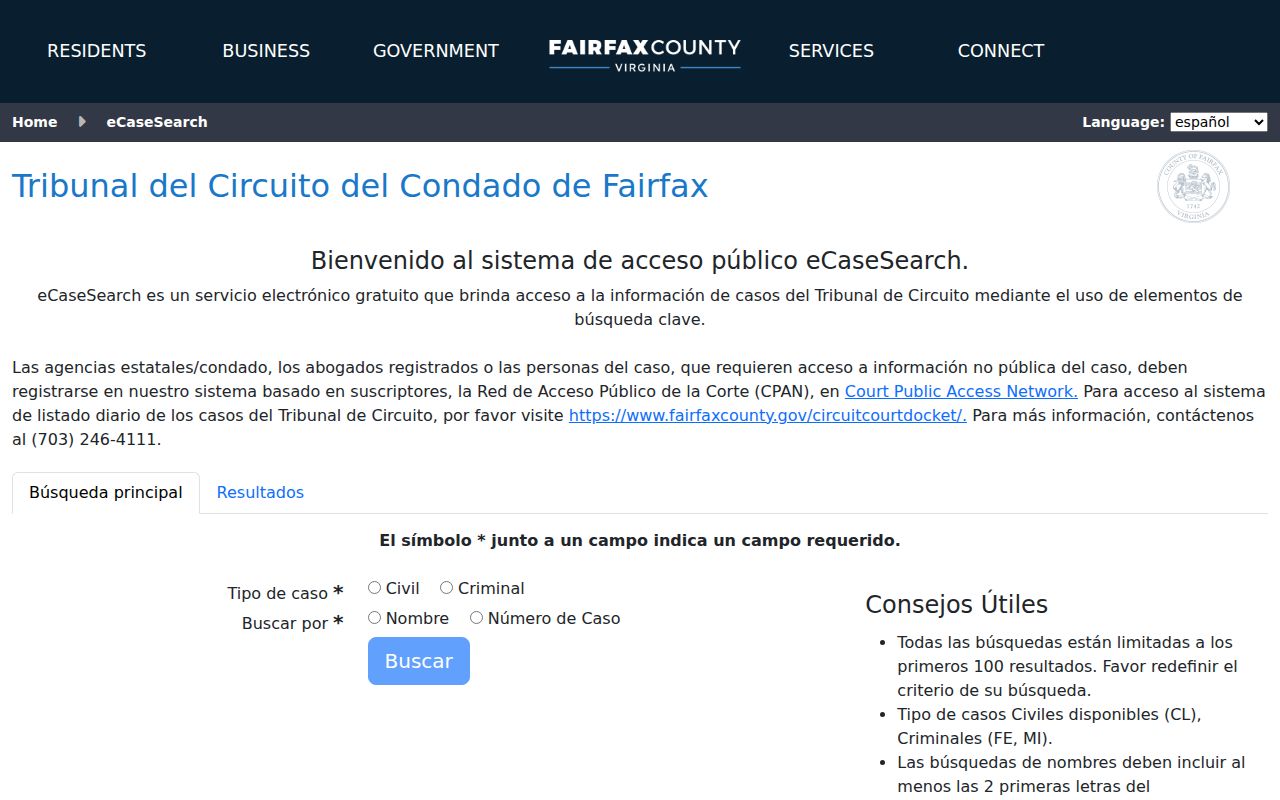
The screen helps narrow a court search, but the clerk, CPAN, and file-copy process provide the separate document-access paths.
McLean Permit Records Add a Date
Fairfax’s Planning and Land Use System, known as PLUS, adds an address-based development layer to a McLean residents directory search. Anyone can browse and search the portal, although an account is needed to submit an application, track one’s own application, pay, or receive notifications. The general search can use a record number, project name, supervisor district, date range, parcel ID, street fields, unit fields, and city, state, or ZIP fields.
PLUS replaced FIDO, PAWS, and ProjectDox on October 31, 2022. A missing PLUS result is therefore not enough to end an older permit search. Fairfax directs researchers to the Site Records Viewer for approved records and plan PDFs, LDIH for earlier building, site, zoning, and complaint material, and VFOIA for an existing public record not available through those routes. The county also warns that official fees are paid through PLUS, not through an unexpected wire request.
Fairfax Land Development public records lays out the PLUS, Site Records Viewer, LDIH, and VFOIA access channels.
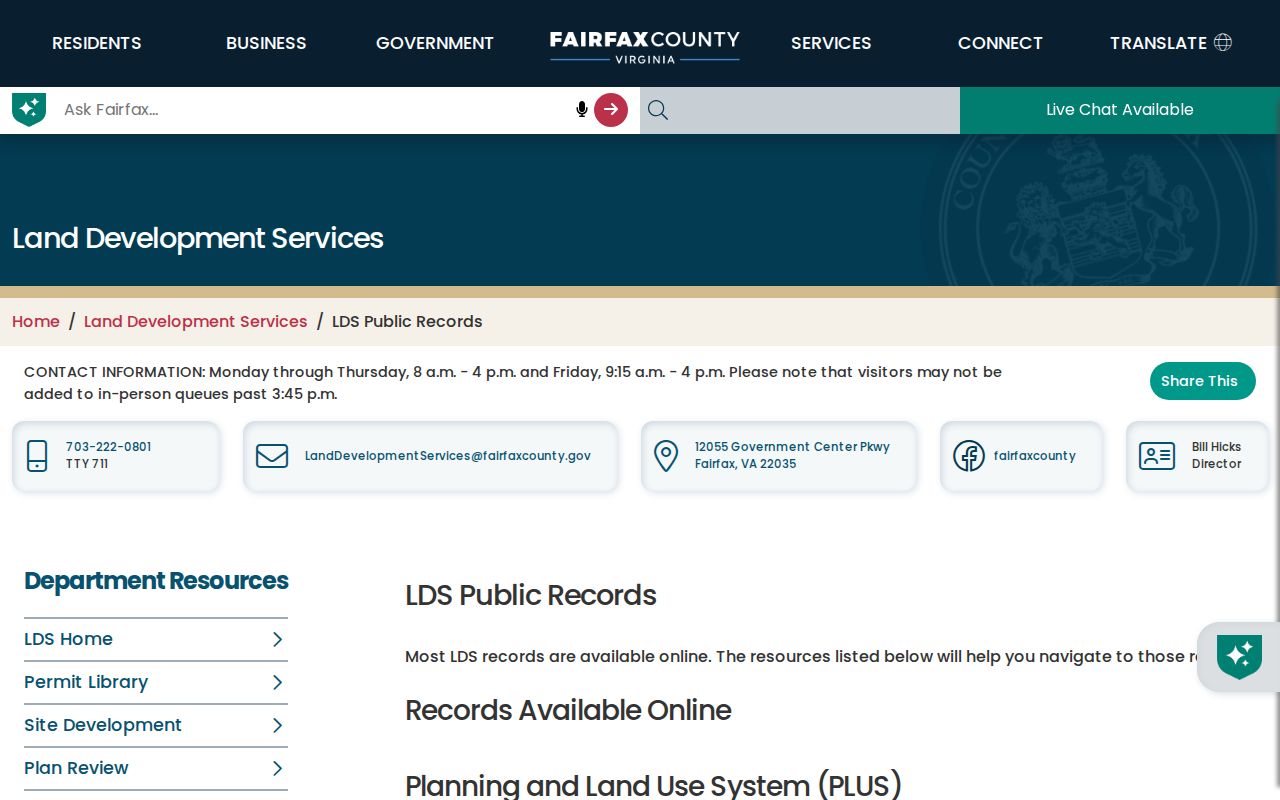
Those parallel channels help place an address event in time without turning a permit search into a claim about every person connected to the site.
McLean Records That Stay Restricted
Some missing search results are privacy limits, not gaps. Virginia’s Address Confidentiality Program protects qualifying participants through a designated address. DMV personal and driver information is protected under the federal DPPA and Virginia law. Recent vital certificates have eligibility rules, Juvenile and Domestic Relations files are confidential, and sealed court records are not ordinary public web results. A utility account is also not a public residents directory source.
Virginia’s Freedom of Information Act, Va. Code §§2.2-3700 through 2.2-3715, can be used to request existing county records from the custodian, but it does not erase exemptions or create a record that does not exist. Direct a correction request to the office that made the record: DTA for an assessment issue, Elections for registration, VDH for a vital record, or the Circuit Clerk for a land or court record.
Historical McLean Resident Directories
For a past McLean household, the Virginia Room is the key local collection. It holds Fairfax and Northern Virginia local history, genealogy materials, directories and telephone books, newspapers, maps, yearbooks, microform, and a CPAN station. Fairfax County directory runs documented by the library include 1877, 1878, 1880, 1884, 1888, 1890, 1897, 1906, and 1911. They are intermittent, so a missing year is not evidence that a household left.
Read an old entry as a dated clue. It may show a surname, given name, address, occupation or business, and household notation. Then compare the result with a census year, newspaper notice, deed, probate item, or map. The McLean city directories collection page explains the shelves, entry-reading method, and family-history trail in depth.
Note: Ask Virginia Room staff for the exact volume, call number, and whether a reverse or telephone source exists for the particular year and address.
McLean History Has Record Gaps
Fairfax County’s records reach back to 1742, but the long trail is not complete. Civil War losses affected wills, deeds, and loose papers, and many deed books from 1763 through 1819 are missing. The Historic Records Center keeps original deed books, tax books, wills, chancery material, order books, and other series with their own coverage gaps. A sound historical search records the gap instead of filling it with a guess.
When a deed book is missing, use surviving tax books, successor deeds, map keys, chancery references, newspapers, probate, directories, and Library of Virginia microfilm to build a cautious trail. Fairfax’s 1860 property-owner maps can connect an owner and acreage to deed, will, or chancery references. Digital images and remote portals make many records easier to find, but they do not replace the archive, the microfilm reader, or a careful note about what did not survive.